
Choosing Your Lenses
Single Vision Lenses
Perfect for correcting nearsightedness or farsightedness. Our single vision lenses provide clear vision at one distance.
Progressive Lenses
Seamless multifocal lenses that provide clear vision at all distances - near, intermediate, and far - without visible lines.
Bifocal lenses
Bifocals combine distance vision in the upper part of the lens and near vision in a lower segment. This allows you to switch focus simply by looking through different parts of the lens.
Blue Light Blocking Lenses
Protect your eyes from digital eye strain with our blue light filtering technology, ideal for extended screen time. Blue light blockers for binge-watching, vlog-viewing, gaming… and all your work needs.
Photochromic Lenses
Photochromic lenses contain molecules that react to UV light, causing the lens to darken outdoors and lighten indoors. They are available in plastic, polycarbonate, and glass materials.
Lens Coatings & Add-ons
Why do we need lens coating?
Lens Coatings help to enhance the quality and performance of your lenses.
There are several types of coatings which can be applied to impart effective, long-life to your lenses.
Some of the most popular ones are -
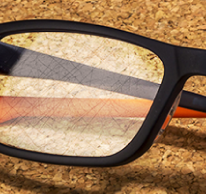
Scratch Resistant
No eyeglass lenses, not even glass lenses, are scratch proof. However, lenses that are treated front and back with a clear, scratch resistant coating have a much harder surface that is more resistant to scratching, whether from dropping your glasses on the floor or occasionally cleaning them with a paper towel.
- Scratch-resistant coating: This coating will make your glasses less vulnerable to scratching if you happen to drop them or clean them with an abrasive cloth. “Many glasses wouldn’t last a day without this.
Lenses are often treated with special coatings or technology to protect your eyes from harmful glare and eyestrains. The technology helps to provide better visual acuity all throughout your eyewear journey. Some of the types are:

Anti-glare or Anti reflective
Also called AR Coating. Eliminates reflections of light & Improves vision.
- Anti-reflective coating: Typically applied on both sides of an eyeglass lens which reduces the amount of light reflected off the surfaces of spectacle lenses and also useful for those who often drive at night (it can reduce reflections from headlights at night) and read on computers.

UV Protection
Filters out 100% of UVA and UVB light. Blocks all light rays up to 400 nm &
Provides optimum protection to eyes.
- UV protection: Over time, exposure to the sun’s ultraviolet rays can lead to vision problems such as cataracts and retinal damage. But many eyeglass lenses have a substantial amount of UV protection built in. You can also sometimes buy an additional treatment to safeguard your eyes fully or opt for lenses with 100 percent protection.
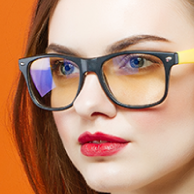
Blue Cut
Reflects blue light. reduces strain on the eyes & imparts more clarity in vision,
Blue‑cut lenses are designed to reduce the amount of high‑energy visible (HEV) blue light that reaches your eyes, especially from screens, LED lighting, and sunlight. They’re often marketed for people who spend long hours on computers or phones and want relief from digital eye strain.
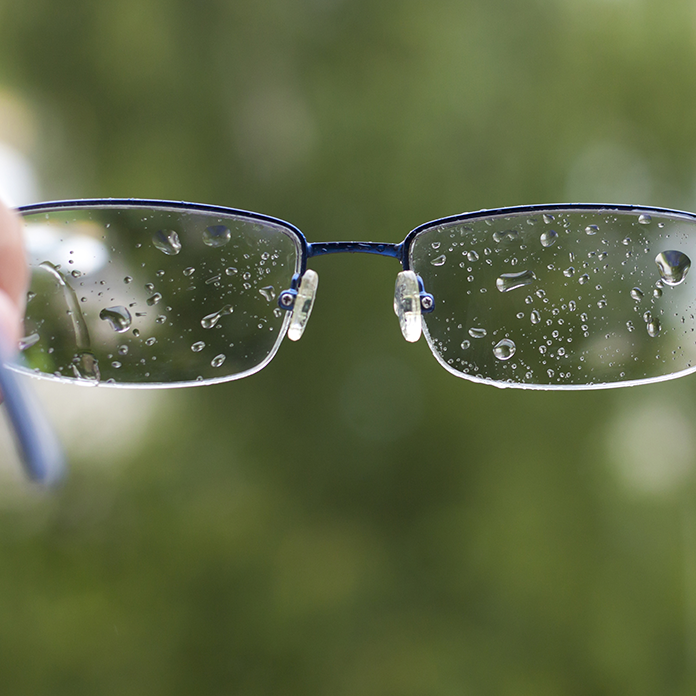
Hydrophobic Anti-Glare Lenses
Additional coating to repel water.
Exhibits anti-glare properties.
Easier to clean.
Hydrophobic anti‑glare lenses combine two different coatings—one that repels water and another that reduces reflections—to give you clearer, cleaner, and more comfortable vision. They’re especially useful if you deal with glare (night driving, screens, sunlight) or if your lenses get dirty easily.

Transition Lenses (Photogrammetric)
- Photochromic (transitions): Transitions are clear indoors and automatically darken outdoors in seconds. By optimizing the amount of light your eyes receive, Transitions® lenses help block 100% of UV rays and filter blue violet from sun and artificial sources (screens, LEDs, digital devices, etc.) to provide comfort for your eyes.
Lens Thickness
The refractive index of a lens, it's the ratio of the speed of light in a vacuum to the speed of light in the lens material, reflects the ability of a lens to refract light. The higher the refractive index of the lens the thinner the edge thickness of the lens. Currently, there are several mainstream lenses on the market, such as 1.57, 1.61, 1.67, 1.71 and 1.74.
1.57 Mid-Index -Standard Lens
This index is most suitable for prescriptions with an SPH correction of +/-2.25 and below, or a CYL correction of +/-1.50 and below.
1.61 High-Index-Thin and Light Lens
These lenses are thinner and stronger than their 1.5-index counterparts, handling SPH corrections between +/-5.00 and +/-4.00, and CYL corrections of +/-3.00 and below.
1.67 High-Index-Ultra-Thin Lens
These lenses are suited to people with SPH corrections between +/-4.25 and +/-6.75, and CYL corrections between +/-2.25 and +/-3.00.
1.71 High-Index-Super-Thin Lens
We typically recommend these lenses for people with SPH corrections between +/-7.00 and +/-9.00, and CYL corrections between +/-3.25 and +/-4.00.
1.74 High-Index-As Thin as Possible Lens
These lenses are best for prescriptions with SPH corrections of +/-9.25 and above, and CYL corrections between +/-4.25 and +/-6.00.